Description
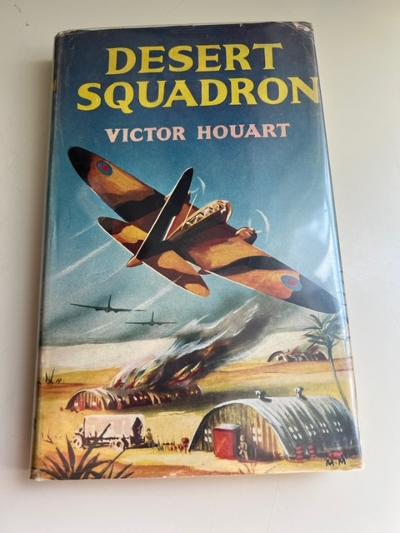
Desert Squadron by Victor Houart
Hardback first English edition with dust cover published by Souvenir Press Ltd 1959
They were the men of an RAF desert squadron. Men drawn from all walks of life to fight for their country in a harsh and alien land. When they killed, they did so without hatred or remorse, only remembering their own diminishing numbers. And when fear sometimes took hold of them it was because they too were of flesh and blood and to die at the age of twenty is a prospect to freeze any heart.
Unsung — unknown, almost, except to those who mourn them and to their few surviving comrades — these were the men whose memory whispered to Victor Houart across the vast barren wastes, drawing him to them on a pilgrimage fifteen years later. In the desert, little has changed. Markers still remain along the routes of their dangerous flights. The billowing hot dust swirls round half-buried airframes, twisted and scorched. At the foot of occasional dunes pieces of propeller blades form lonely, silent headstones. From time to time the simoun raises the red soil for a listless Bedouin who kicks aside scraps of iron and oddments of burnt leather scattered over a former runway. The thunder of war has passed, but for those who will listen the air is peopled with voices. Like the delicate sand roses that bloom miraculously in the barren hollows of the desert, the voices are indestructible.
Himself a pilot in the Belgian Air Force, Victor Houart was acutely sensitive to the exhilaration, courage and fears of the young men who set out each day on their strange and often perilous adventures. His book is a memorable one, and his unaffected style of writing, “purged”, as the New Statesman has put it, “of facile ironies”, does quiet justice to his splendid theme.”